 MDES

Practical digital business resources for choosing platforms and models
October 29, 2026 · 8 min read
A platform is not a business model. Choose tools that support how you create value, reach customers, and earn revenue, then test whether that approach serves your goals. A practical digital business ebook should help connect these choices instead of treating each as a separate decision.
It’s easy to focus on the visible parts: an app, website, or marketplace. But a tool can’t make a weak offer useful or an unsuitable business model sustainable. Start with the people you serve and the value you provide, then decide how a platform can help deliver it. This article explains how digital platforms and business models fit together, what to consider when selecting tools, and how to keep your goals in view. It also offers practical resources to help turn ideas into a clear plan, one deliberate choice at a time.
Key Takeaways
- Choose platforms based on how your business creates value and serves customers, not on popularity alone.
- Turn strategic goals into clear priorities so each digital tool supports a practical business outcome.
- Build and publish an ebook by moving from a defined reader need to useful content, a suitable format, and a focused launch plan.
- Use the WhatsApp Mobile Sales Playbook to explore how mobile messaging can support a sales approach.
Table of Contents
Digital platforms and business models
An ebook is a self-paced reference; an online course adds lessons, practice, and a learning sequence. A template or software product helps readers complete a specific task, while an ebook explains decisions and methods. Choose the format that fits the reader’s challenge: a sales framework may suit an ebook, while guided exercises may work better in a course.
Separate the platform from the business model. Digital infrastructure includes the technologies, systems, products, and platforms used for commerce, partnerships, and transactions. For example, a payment service processes purchases, while a marketplace connects sellers with buyers. Each tool supports part of the operation; neither defines the full offer.
Map the model across two dimensions: movement from value chains to digital ecosystems, and from a fuzzy understanding of end-customer needs to a sharper one. A maker selling through a marketplace can start with a direct offer, then build partnerships that improve delivery or customer support. Treat transformation as a sequence of choices, not a technology purchase.
Machine, Platform, Crowd frames three pairings: machines over minds, platforms over products, and the crowd over the core. Use this as a prompt, not a universal rule. A digital business still needs leaders to decide where automation helps, whether a platform improves access, and when customer participation strengthens innovation. An academic framework can guide reflection, but a director or founder must connect it to the actual offer and global audience.
Match tools to jobs. Keep the setup simple until the business model shows what needs to scale:
- Google Docs: Draft and revise chapters with comments and shared editing.
- Canva: Lay out a readable ebook using page templates and visual elements.
- Shopify: Manage a branded online storefront and digital product listings.
- Mailchimp: Organize email messages for launch updates and reader follow-up.
For United States sales, handle legal, tax, and copyright questions as separate planning tasks. Tax treatment can depend on the seller’s structure and transaction details. Use original or properly licensed material, and keep records of the content and assets you use.
Common launch risks include writing before testing the reader’s needs, choosing a platform before defining the sales process, and mistaking downloads for learning or demand. Test a sample chapter with intended readers, then revise the framework around their questions. In a changing digital economy, this learning step can expose weak assumptions before they shape the whole program.
Digital strategy and business goals
Digital strategy turns a business goal into choices about customers, work, and technology. Start with a clear outcome. For example, a consultant may aim to sell a self-guided resource, reduce repeated support questions, or reach buyers beyond local networks. Each goal points to a different offer, workflow, and measure of progress. Organizations need this thinking before adopting emerging platforms or artificial intelligence.
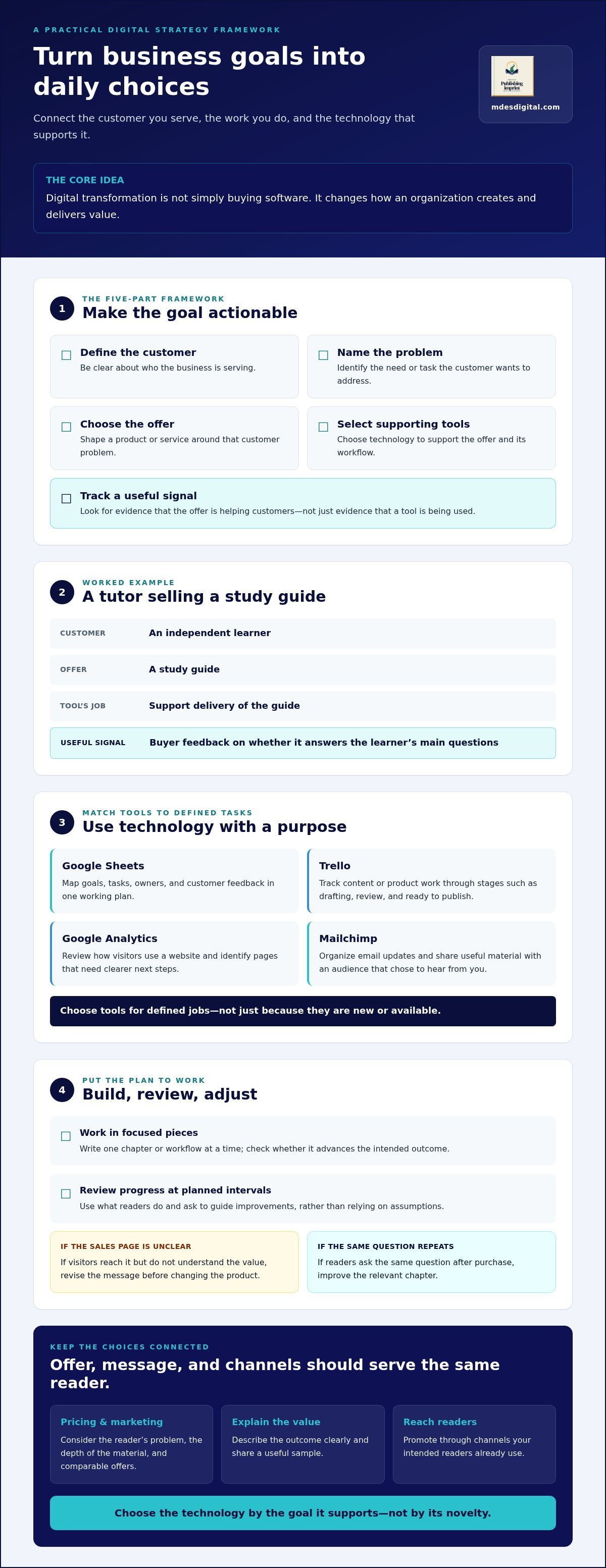
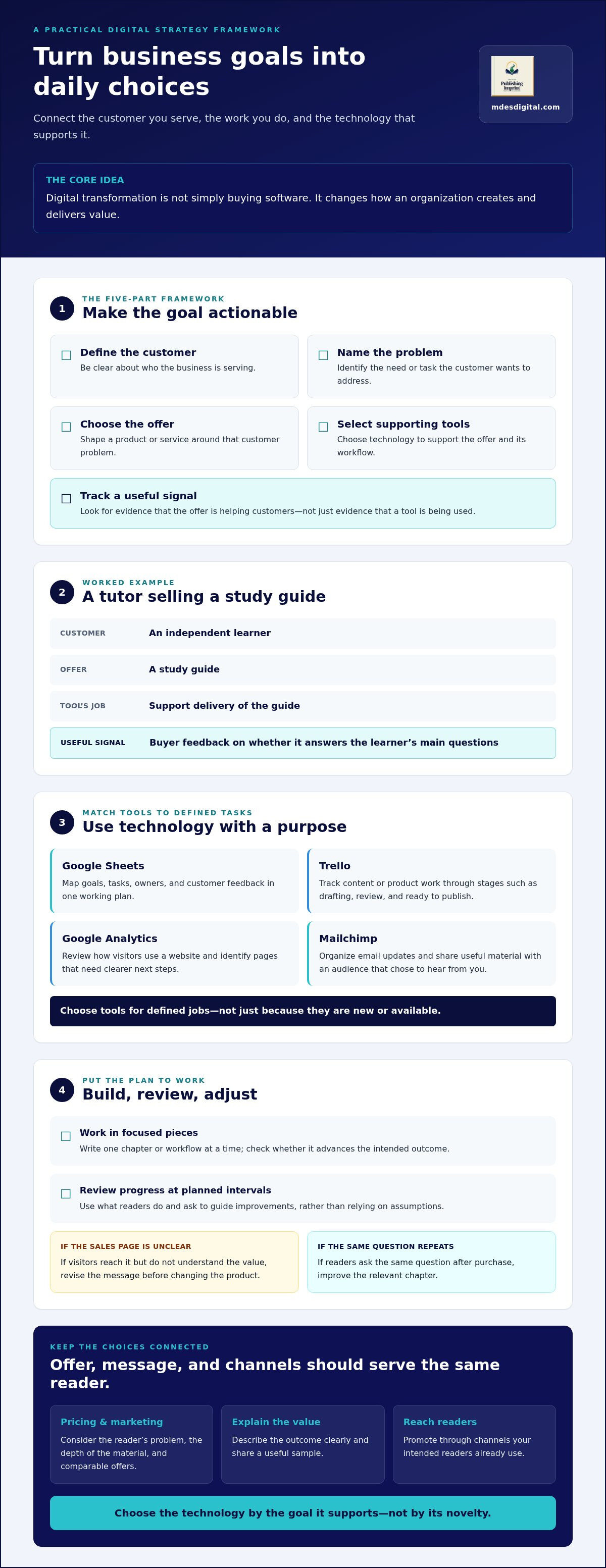
Use a simple framework to connect a goal with daily action: define the customer, name the problem, choose the offer, select supporting tools, and track a useful signal. If a tutor wants to sell a study guide, the customer might be an independent learner. The offer is the guide, and the platform supports delivery. A useful signal could be buyer feedback on whether the material answers the learner’s main questions.
Digital transformation is not the same as buying software. It changes how an organization creates and delivers value. A machine can handle a repeated task, such as sorting incoming requests, while people handle judgment and exceptions. Platforms can connect a business with customers or partners, but they also shape how those relationships work. Review each choice against the goal, not its novelty.
Keep the plan specific. Write one chapter or workflow at a time, then ask whether it advances the intended outcome. A practical digital business ebook, for example, should help readers make decisions they can apply, not just introduce technology terms. Successful execution depends on clear thinking, useful content, and consistent review. These habits matter whether the business sells guidance, services, or digital products.
Use tools for defined tasks rather than collecting accounts:
- Google Sheets: Map goals, tasks, owners, and customer feedback in one working plan.
- Trello: Track content or product work through stages such as drafting, review, and ready to publish.
- Google Analytics: Review how visitors interact with a website, then identify pages that need clearer next steps.
- Mailchimp: Organize email updates and share useful material with an audience that has chosen to hear from you.
When pricing and marketing an ebook, consider the reader’s problem, the depth of the material, and comparable offers. Describe the outcome clearly, share a useful sample, and promote through channels your intended readers already use.
Review progress at planned intervals. If readers reach the sales page but don’t understand the value, revise its message before changing the product. If readers ask the same question after purchase, improve the relevant chapter. These small checks help leaders respond to real challenges rather than assumptions. For a structured starting point, explore The Practical Digital Ebook and apply its ideas to one business goal.
How do you create and publish a digital business ebook step by step?
Build the ebook around one reader, one problem, and one usable outcome. A guide for new freelancers, for example, could show how to organize a first client workflow. Turn that promise into a tested draft, a clean file, and a clear way to reach readers.
- Define the reader and problem. Describe who will use the ebook and what task they need to complete. “New freelancers who need a simple client onboarding process” gives you a sharper focus than “people interested in business.”
- Check the need. Gather questions from customer conversations, email replies, or public discussion groups. Sort them into repeated themes, then choose the problem your ebook can address with practical steps.
- Plan the chapters. Create a contents page that moves from the reader’s starting point to the intended outcome. For an onboarding guide, chapters might cover preparation, first contact, information gathering, and follow-up.
- Draft examples and instructions. Use Google Docs to write and revise the manuscript. Add checklists, sample messages, or a filled-in client form where they clarify a step. Keep each example tied to the reader’s problem.
- Edit and format. Review the draft for accuracy, clear sequence, and unsupported claims. Use Canva to create a consistent cover and page layout. Export a PDF, then open it on a phone and computer to check readability.
- Prepare the sales page and delivery. Write a short description that names the intended reader, the problem, and what the ebook helps them do. Set up a digital storefront, upload the final file, and test the purchase and download process before launch.
Match each tool to a task. Google Docs supports drafting and comments; Canva helps with page design; a storefront such as Shopify can list and deliver a digital file. Keep editable source files separate from the customer-facing PDF. This makes corrections easier without confusing the published version.
Before publishing, review every link, heading, and example. Ask intended readers to work through one chapter and note where they hesitate. If they misunderstand a step, rewrite it before launch. After release, use reader questions and feedback to guide revisions instead of adding chapters without a clear need.
Make your first version useful, not oversized. Start building your ebook plan by choosing one reader problem and outlining the steps that solve it.
MDES Digital (Magehema Digital Entrepreneurship System): WhatsApp Mobile Sales Playbook
MDES Digital (Magehema Digital Entrepreneurship System) offers the WhatsApp Mobile Sales Playbook for readers exploring WhatsApp as part of their sales approach. Turn your ebook plan into a working business process: clarify what you offer, who it serves, and how conversations can support a sale. The playbook is a relevant next step when mobile messaging is central to reaching and serving customers.
If you’re still shaping the wider model, The Practical Digital Ebook can support your planning, while Turn Your Smartphone into a Business focuses on mobile entrepreneurship. Choose the resource that matches the task in front of you. Learning materials can help you plan and act, but they don’t replace testing your offer and making your own decisions.
Visit mdesdigital.com to explore the resources or contact MDES Digital.
Turn your plan into a working next step
A digital business plan gains value when you put a clear decision into practice. Choose the next action that matters most: shape the offer, write the first draft, or organize how customers will learn about it. Then pay attention to the questions and obstacles that emerge. Use what you learn to refine the work instead of adding complexity for its own sake.
A practical digital business ebook can be a useful starting point for turning ideas into an organized plan. MDES Digital offers The Practical Digital Ebook, Turn Your Smartphone into a Business, and the WhatsApp Mobile Sales Playbook. Choose the resource that fits the work you’re ready to do, then apply its ideas to your goals.
For information about these resources, contact MDES Digital. Start with one deliberate action, learn from the result, and keep building from there.