 MDES

How to Shape Your Expertise Into a Sellable Digital Product
October 29, 2026 · 7 min read
Your expertise becomes a product when it helps someone solve a specific problem. To learn how to turn knowledge into a digital product, define a clear outcome, test whether people want it, compare similar offers, then choose a format that fits the solution. Start with the problem, not the platform.
You may already have useful experience, notes, or a repeatable process. The challenge is identifying which part can help someone else and shaping it into something they can use. A broad topic may feel meaningful, but a focused solution is easier to explain and test.
This guide walks you through choosing a specific problem, checking demand before building too much, comparing creator pricing without copying it blindly, and selecting a format such as an ebook, template, or course. You’ll leave with a practical way to turn what you know into a product idea you can test and improve.
Key Takeaways
- Narrow your expertise to one clear problem and a practical outcome someone can use.
- Test interest with a small version before investing time in a complete product.
- Compare creator offers by the problem they solve and the value they deliver, not just their prices.
- Choose a format that fits the knowledge and the task, such as a guide, template, or course.
Table of Contents
Choosing a specific problem to solve
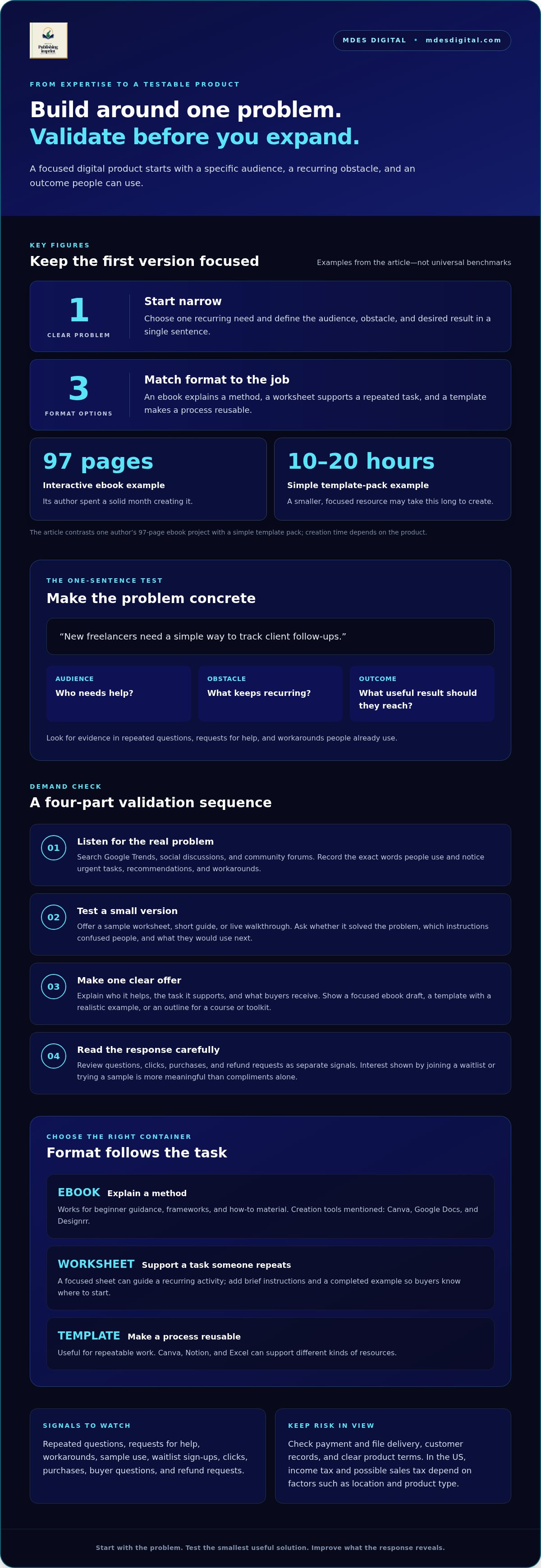
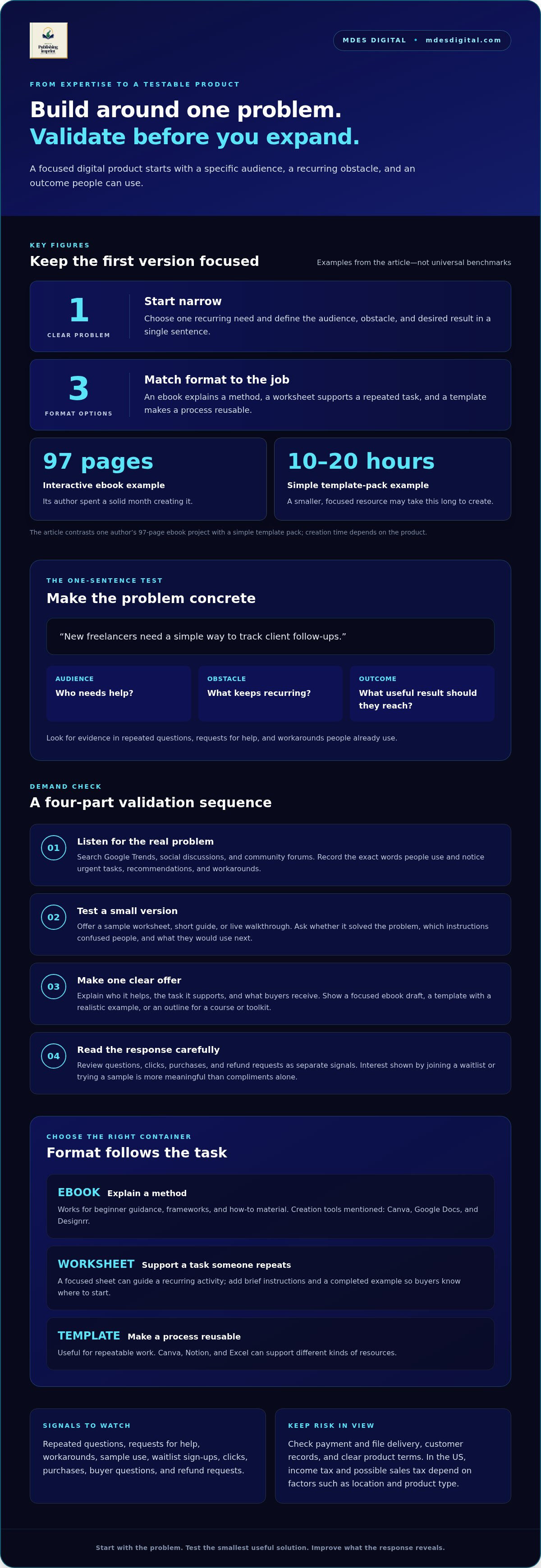
- List tasks people already ask you to explain, then choose one recurring problem. Define the audience, obstacle, and desired result in one sentence. For example: “New freelancers need a simple way to track client follow-ups.” A strong product idea has a clear audience, a recurring need, and a useful outcome. Look for evidence in repeated questions, requests for help, and workarounds people already use.
- Match the format to the job. Use an ebook for a step-by-step method, a worksheet for a task someone repeats, or a template for a process they can reuse. Canva, Notion, and Excel can support different kinds of resources. Keep the first version focused: a 97-page interactive ebook took its author a solid month, while a simple template pack may take 10-20 hours to create. Choose a narrow result before adding lessons or extras.
- Choose a sales platform by checking whether it supports payments, file delivery, customer records, and clear product terms. A downloadable worksheet, for example, needs reliable access after purchase. If you sell in the US, account for income tax and possible sales tax, which depend on factors such as location and product type. Use accurate descriptions, clear purchase terms, and content you own or have permission to use. Reduce risk by avoiding unsupported promises, protecting customer information, and testing the product with a small audience before expanding it. A platform can process transactions, but it can’t prove demand or clarify confusing instructions.
If your idea needs explanation rather than a reusable task, consider an ebook. Ebooks work well for beginner guidance, frameworks, and how-to material. Tools such as Canva, Google Docs, and Designrr can help you create one. Choose a tool that suits your content and workflow.
Validating product ideas against market demand
- Start with evidence, not a polished product. Search Google Trends, social media discussions, and community forums for recurring questions about your topic. Note the exact words people use, then compare them with your proposed outcome. For example, “organize freelance client follow-ups” is easier to assess than “learn productivity.” Notice whether people describe an urgent task, ask for recommendations, or share workarounds. These clues help reveal whether your audience has a problem worth solving.
- Test a small version before building the complete product. A minimum viable product delivers the core solution without unnecessary lessons or extras. Offer a sample worksheet, short guide, or live walkthrough, then ask for specific feedback: Did it solve the problem? Which instructions were confusing? What would they use next? Compliments alone are weak evidence. More meaningful interest appears in actions, such as joining a waitlist or trying the sample.
- Shape your first launch around one clear promise. For an ebook, prepare a focused draft and sample. For a template, show how it works with a realistic example. For a course or toolkit, outline the steps and create only enough material to test them. Explain who it helps, what task it supports, and what buyers receive. Set a launch period, share the offer on social media, and invite responses from your intended audience.
- A website isn’t essential for an early test. Use a social media profile, email message, or hosted checkout page to explain the offer and collect orders or sign-ups. Keep the description consistent across each channel. After launch, review questions, clicks, purchases, and requests for refunds as separate signals. Improve the confusing part before expanding the product. A practical digital product framework can help organize those next steps.
Creator case studies and product pricing
- Study creator examples for the business model, not just the headline. A focused publication can become a commercial asset, but another creator’s results don’t set a benchmark for your product. Examine the audience, offer, and sales method behind each example. Then identify which elements fit your skills and customer problem.
- Compare similar products by what buyers actually receive. A short reference guide, detailed course, and toolkit with templates serve different needs. Note each offer’s promised outcome, depth, format, and included support, then compare those features with your draft. If your product covers one narrow task, don’t price it like a full learning program. Make the value clear before deciding on a price.
- How much does it cost to create and sell a digital product? Costs depend on the format, creation tools, sales platform, and any payment or delivery fees. A document-based guide may need different resources from a recorded course. List the tools and services you plan to use before setting a budget.
- Set a starting price by weighing the outcome, effort saved, and alternatives available to your audience. A spreadsheet that organizes a recurring work task, for example, can be useful if it saves buyers setup time. Make sure the instructions, examples, and files support the price. After launch, track sales and buyer questions. If people misunderstand the offer, improve its description. If they need more help, refine the product before adding features. Let the offer and buyer response guide your pricing, rather than copying a number from a creator case study.
Digital product ideas
- Turn a repeated explanation into an ebook, audio lesson, or short reference guide. A beginner guide can teach one skill, while a framework can help readers make decisions. For example, a home baker could explain how to adjust recipes for different pan sizes. Start with notes, presentations, or lessons you already use. Organize them around a clear task and add examples that help readers apply each step.
- Package repeatable work as templates or worksheets. A client intake form, project tracker, or weekly planning sheet can make a task easier. Use Google Sheets for a tracker or a document for a worksheet. Add brief instructions and a completed example. A blank file can leave buyers unsure where to start, so show how each field supports the intended result.
- Build a reference tool for information people need to find quickly. A checklist, decision tree, glossary, or script collection can make expertise easier to use. For example, a job seeker could use interview prompts grouped by question type. Label sections by situation and remove anything that doesn’t serve the tool’s purpose. If you’re deciding how to turn knowledge into a digital product, choose a format that makes the next action clear.
- Choose one small idea and outline its first version. Simple digital product ideas can be launched in 10 days, according to the market research summarized for this topic. For an ebook, Google Docs or Designrr can help prepare a draft. Test the instructions with a reader and note where they pause. A useful way to think about how to turn knowledge into a digital product is to build around one practical task. Explore The Practical Digital Ebook as you shape your own draft.
MDES Digital (Magehema Digital Entrepreneurship System): WhatsApp Mobile Sales Playbook
MDES Digital (Magehema Digital Entrepreneurship System) offers the WhatsApp Mobile Sales Playbook for creators who want to present a digital offer to potential buyers through WhatsApp. Use it as a practical learning resource once you’ve shaped your product and want to develop your mobile sales approach. A useful product also needs clear communication: explain who it helps, what problem it addresses, and how people can learn more.
If you’re shaping your expertise into a downloadable guide, The Practical Digital Ebook is a relevant resource. Choose what fits your next task: developing a product or learning about mobile sales. Keep your work grounded in a specific audience and offer.
Visit mdesdigital.com to explore the WhatsApp Mobile Sales Playbook.
Make the Next Step a Small One
Expertise becomes useful to others through clear teaching and steady improvement. Put one idea into practice: write a short outline, draft a sample, or map the steps for a tool someone could use. Learning how to turn knowledge into a digital product is less about producing everything at once and more about making your knowledge easier to apply.
MDES Digital (Magehema Digital Entrepreneurship System) offers resources for different parts of this work. The Practical Digital Ebook and Turn Your Smartphone into a Business cover shaping knowledge into practical business ideas. The WhatsApp Mobile Sales Playbook focuses on mobile sales. Choose the resource that fits your current task, then put what you learn into action.
Explore MDES Digital’s resources and take the next practical step with your idea.